
For much of the past year I’ve been hard at work on a slightly secret project: Rotten Crown. This rpg started with a system I wrote in an afternoon to introduce some friends to roleplaying, and has expanded by leaps and bounds since.
The game is designed for short campaigns of three to five sessions, not years-long epic campaigns. I want the stories people tell to feel exciting and significant during every single session, and as a gamer in their thirties I know I don’t have a group that can meet every week for ten years.
The Setting
Rotten Crown is a fantasy game centering on the city-sized Necropolis of Gog, a place of rest for the dead in a fantasy world where such things are hard to find. Your party are some of the living residents of this great place, and you are tasked to protect and appease the dead from untold dangers and intruders.
I wanted to write a game where the players aren’t mindlessly chopping up the dead looking for silver. Instead you’ll journey deep underground to bring peace to strange, tortured tombs.
The Game
In many ways Rotten Crown plays like a traditional sword and sorcery RPG, but with some notable tweaks. The character archetypes are unusual twists on fantasy tropes, like the Greenhost whose body is shot through with living plants that can provide valuable resources to the party, or the Martyr who can permanently reduce their hit points to perform life-saving miracles.
Where many games have skills representing the characters’ deep knowledge of history, science, etc. Rotten Crown replaces these with a system called Lore. Lore is a resource that characters receive from exploring and learning about the world around them. When the player is stuck and needs to know something, they can then spend a point of lore. The GM will tell them the most relevant information they can related to that lore type.
Example: Gregor was pursuing a grave robber who threw a handful of burial jewelry into a river as they escaped. He has to recover the jewelry, but it’s very difficult to find on the river bottom.
Gregor: Can I spend a science lore to see if I know anything that could help?
GM: Yes! You know that the jewelry is probably partially made of iron, and that the rocks along this riverbank are rich in magnetic lodestone.
Gregor: Great! Can I locate some lodestone if I spend an hour or so searching?
GM: After about twenty minutes you’re able to extract a fist-size piece of lodestone from a nearby rock face. It sticks to your knife as you prise it out.
Gregor: I tie an end of my rope to the lodestone and begin casting it out and reeling it back along the riverbed where the thief threw the jewelry
GM: After only a few minutes you see a silvery glint attached to the lodestone as your reel it back, success!
The Art
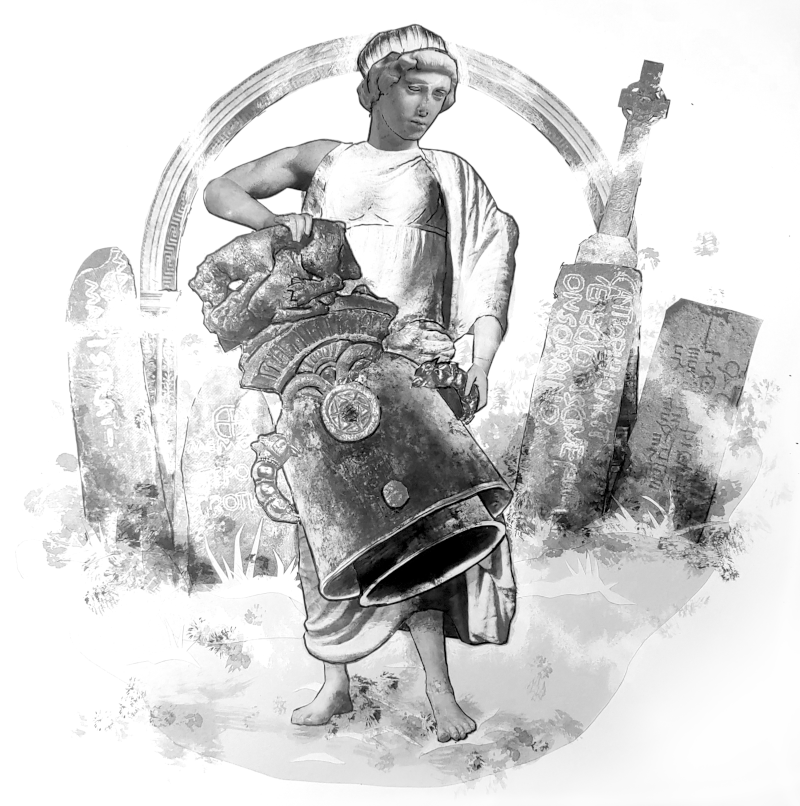
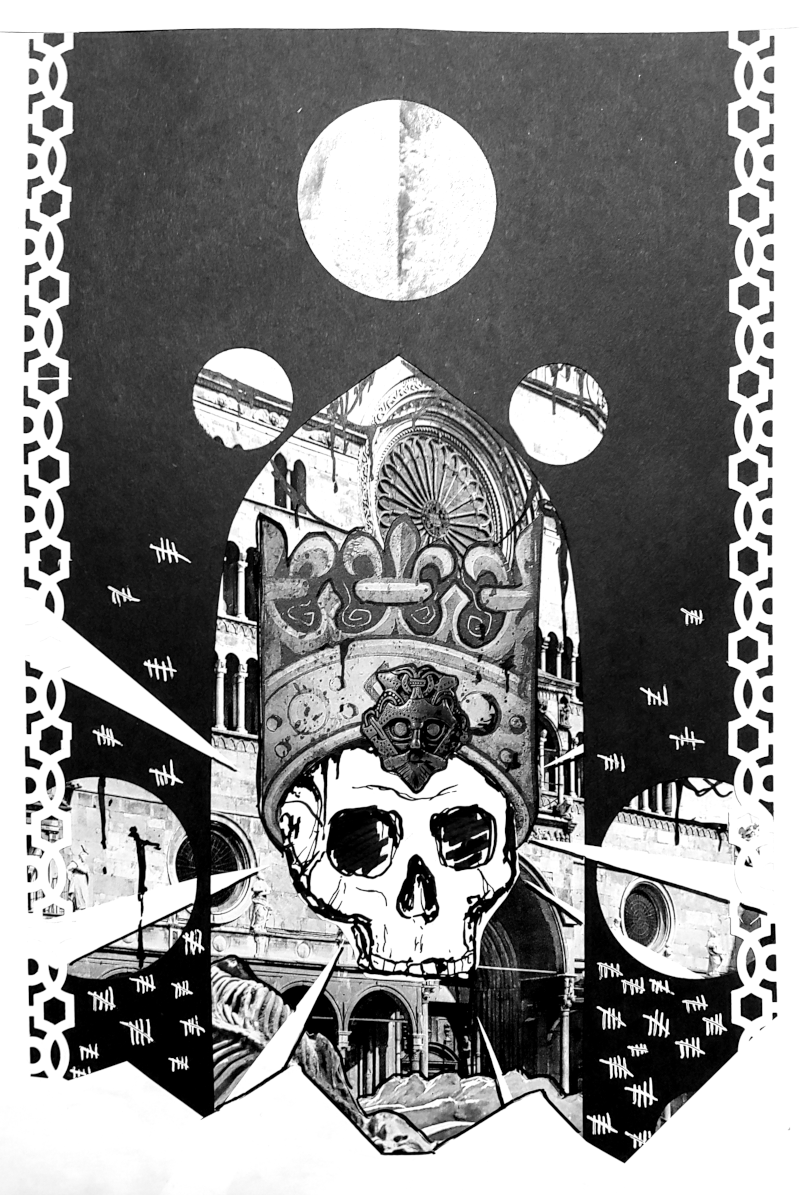
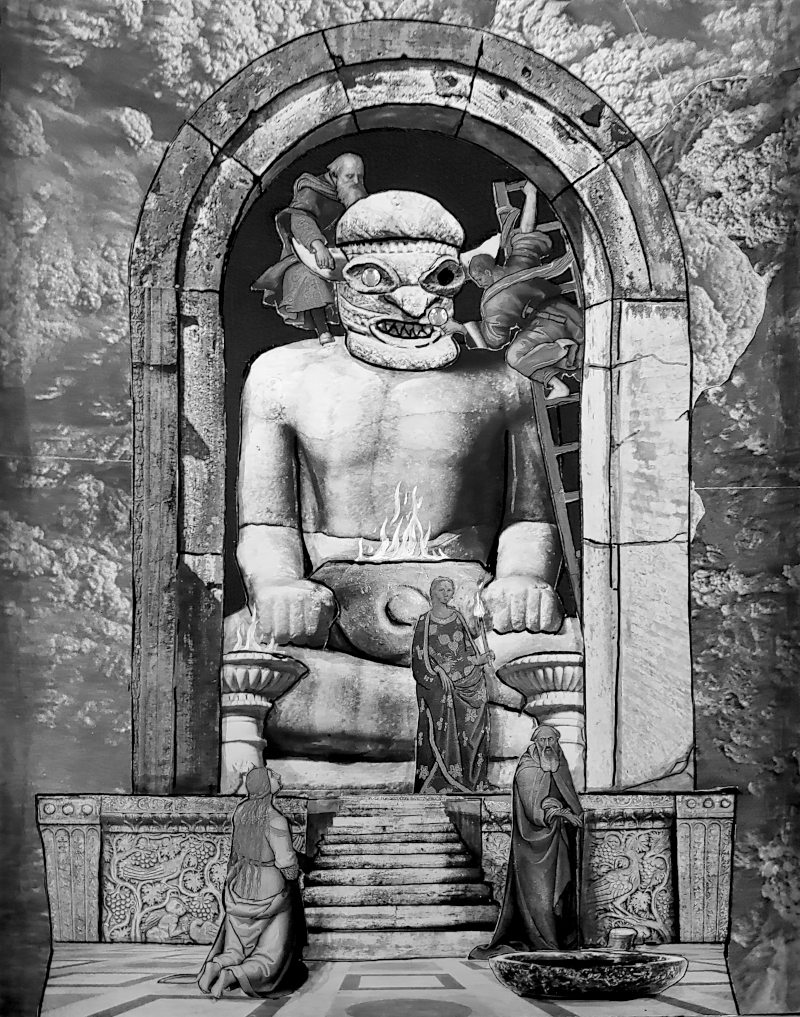
I’ve created over a dozen illustrations for the book already. These are physical collages created by hand and then digitized in black and white. I’m sure many of these illustrations will end up in the Gallery soon.
Want to Play?
I’ll be releasing PDFs soon for open playtesting. I’ll be looking for feedback from players and GMs who want to help guide the game and make it as good as it can possibly be, so please get in touch! If you live in the northeast US and want to try the game out, I’ll probably run the game personally for you.
In addition, I’ll be posting updates to the game here on the blog so people can understand my process of developing large and complex games. If you’re working on your own games, I hope it can be helpful in keeping you organized and headed in the right direction.
See you soon!